
Tech
Why a liquid cooled charging station matters to a project
Published
19 hours agoon
By
Admin
At a busy highway stop, station availability depends on the thermal behavior of power electronics as well as the driver’s charging curve. This is a familiar challenge in high-power charging projects, where decisions made early can restrict operation for years. Start with an operating requirement that can be verified in the field. Procurement language is much more useful when engineers, owners and operators agree on the same boundary of responsibility.
Table of Contents
ToggleDesign Heat Rejection
Liquid cooling moves heat; it does not make heat disappear. The location of cooling equipment, airflow to heat exchangers and ambient temperature affect performance. Electrical designers and civil teams should review clearance and service access together. A congested installation can be more difficult to maintain than an equally powerful system with a better layout.
Allocate Shared Power
Power pools can serve several dispensers with changing demand. That helps utilize the electrical connection but requires an allocation policy that reflects customer wait time and vehicle acceptance. Test scenarios with multiple arrivals rather than an isolated car. Operators should know how the system behaves if one dispenser or converter module is unavailable.
A practical way to evaluate a liquid cooled charging station against the real constraints of this location, not the capabilities of an ideal test site. Cooling loops, dispenser placement and power sharing have to fit the site electrical design.
Verify Vehicle Compatibility
Connector capability does not guarantee that every vehicle accepts maximum current or voltage. Charging curves depend on the battery system, temperature and initial state of charge. Publish realistic customer information and test several vehicle categories. Demonstration results should identify both the charger operating condition and the vehicle limitations.
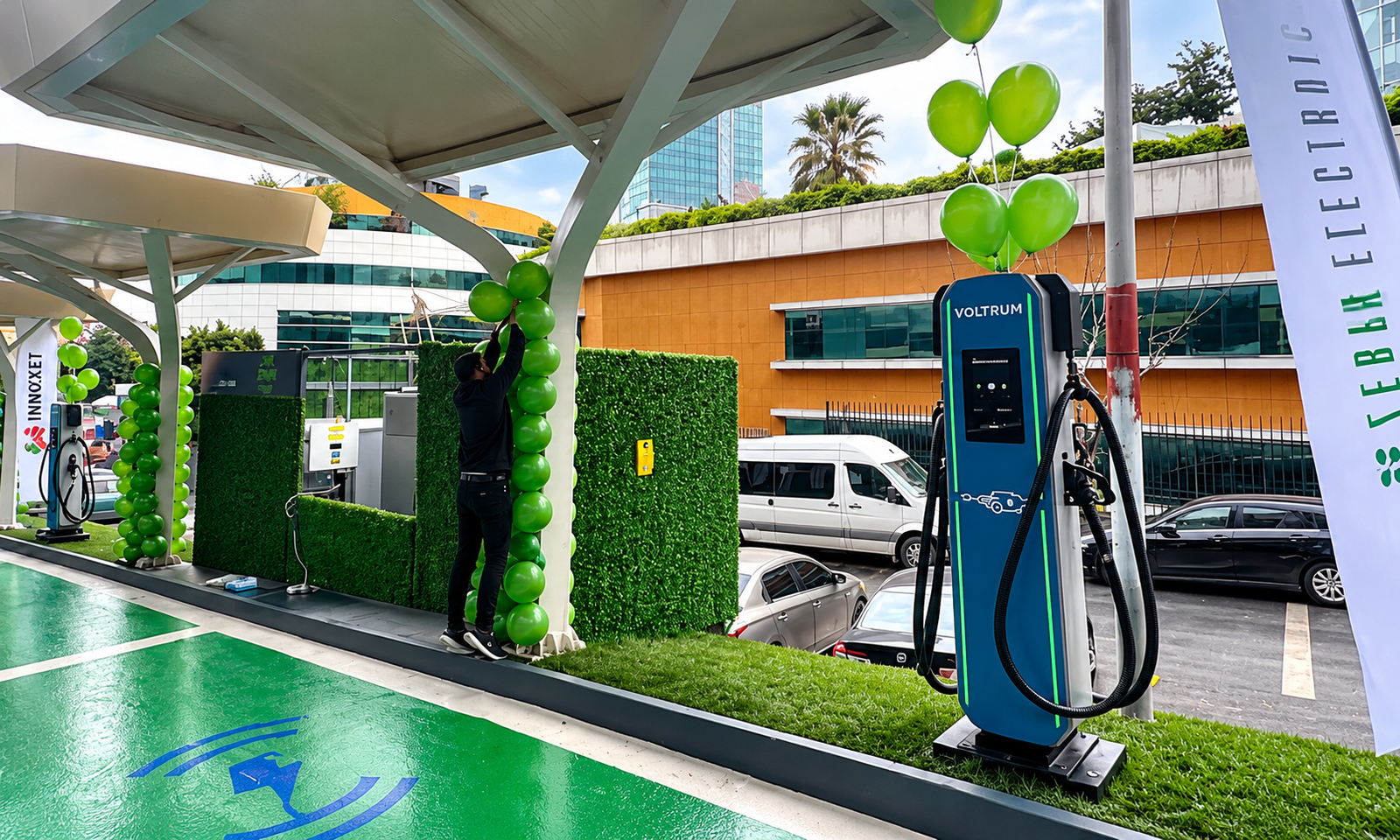
Heat rejection and coolant servicing are easily overlooked in a small parking-area layout.
Measure Service Quality
Availability, successful session starts, energy delivered and mean time to repair are more meaningful than installed charging power alone. Define how aborted sessions and unavailable connectors are counted. Operators should use logs to distinguish repeated user-interface problems from thermal or electrical faults. An honest baseline supports better maintenance decisions.
Keep Vehicle Limits in View
Charging power is negotiated between station and vehicle and typically changes during the session. Battery temperature, state of charge and model-specific acceptance limits affect the result. Peak connector ratings should therefore be accompanied by realistic charging curves. Operators can improve trust by publishing clear guidance without promising the same speed to every driver.
The case for a liquid cooled charging station is best established through a measurable site-level outcome. Request thermal-performance evidence and an accessible maintenance plan.
Measure Finished Sessions
Tracking connected time is not enough. The operational outcome is whether vehicles received the energy needed before departure. Log delivered kilowatt-hours, faults, queue delays and schedule overrides. Those records can identify chronic undersizing or inefficient allocation. They also provide credible evidence for the next round of capital investment.
A relevant product reference for liquid cooled charging station can help frame the final acceptance tests. Supplier documentation still needs to match the selected configuration.
Why a liquid cooled charging station matters to a project
Using a heavy truck charging station more effectively
Why You Need Strength Training for Muay Thai
Smart Cooling: Preparing for the Next Wave of Dense IT Loads
Flower Delivery Warsaw Poland Beyond the Bouquet: Plants, Luxury Flowers and Stems
Karen Lynch and Elizabeth Taylor: Two Remarkable Careers
Safra Catz and John Stankey: Business Careers and Personal Lives
Engineered Hardwood or Solid Wood Flooring for Your Home
9 Signs Your Automatic Watch Collection Needs a Watch Winder
When Should You See a Neurosurgeon? Symptoms, Conditions, and What to Expect
Dixie Brubaker: Life Story of Dinesh D’Souza’s Former Wife
JOP Net Worth 2025: How Rich Is the Fuerza Regida Frontman?
Who Is Khalyla Kuhn? Life, Family, and Career of Bobby Lee’s Partner
Jaidyn Alexis Age: How the Star Balances Motherhood, Music, and Fame
Rouba Saadeh: Life, Career, and Everything About Michele Morrone’s Ex-Wife
All About David Rubulotta – Age, Career, Family, and Life with Erin Burnett
Who is Harry Joseph Letterman? Facts About David Letterman’s Son
Who Is Rebecca Romney? Life, Work, and Personal Story
Who Is Terrence Duckett? Facts About Jasmine Guy’s Ex-Husband
Cindy Costner Net Worth – Inside the Life of Kevin Costner’s First Love
Why a liquid cooled charging station matters to a project
Using a heavy truck charging station more effectively
Why You Need Strength Training for Muay Thai
Smart Cooling: Preparing for the Next Wave of Dense IT Loads
Flower Delivery Warsaw Poland Beyond the Bouquet: Plants, Luxury Flowers and Stems
Karen Lynch and Elizabeth Taylor: Two Remarkable Careers
Safra Catz and John Stankey: Business Careers and Personal Lives
Engineered Hardwood or Solid Wood Flooring for Your Home
9 Signs Your Automatic Watch Collection Needs a Watch Winder
