
Celebrity
Mark Lindsay’s Life, Music, and Legacy

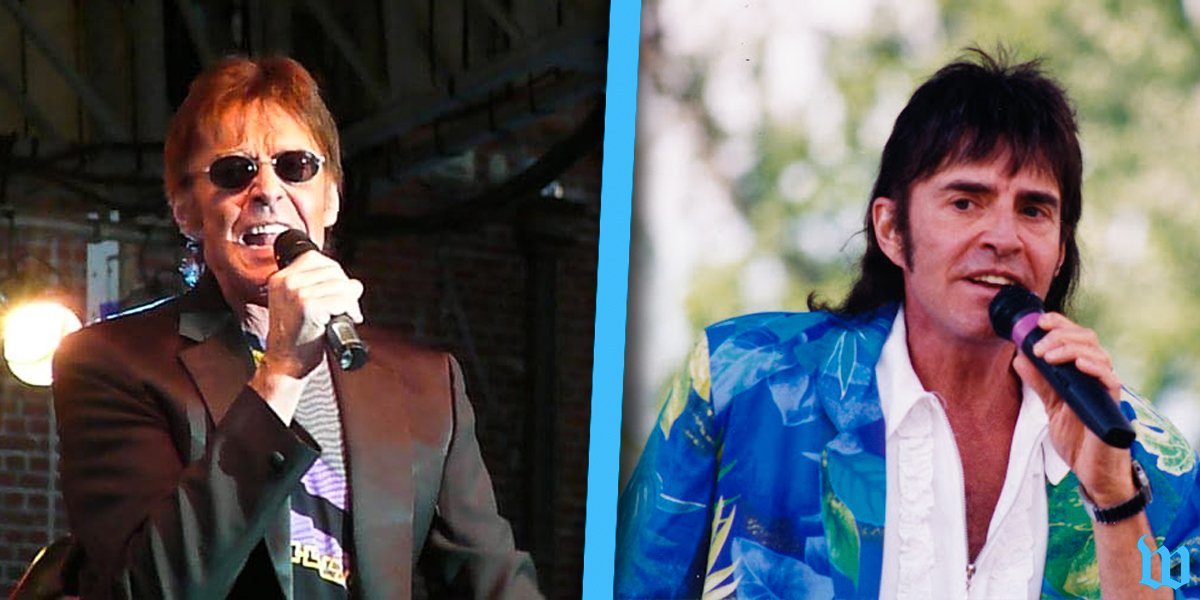
Mark Lindsay is one of those voices that immediately brings a certain era to life. When people think of American rock in the 1960s, they often remember the bright hooks, confident melodies, and the feeling that pop music was both bold and accessible at the same time. Lindsay stood right at the center of that moment as the lead singer of Paul Revere & the Raiders, a band that blended showmanship with radio-ready songs and helped define what mainstream rock sounded like for millions of listeners. His career did not end with that band’s peak years. Instead, it expanded into solo success, behind-the-scenes work in the music business, and a long legacy that continues to be rediscovered by new audiences.
This story is not only about chart positions or television appearances. It is about how a young musician from the Pacific Northwest found his way into the national spotlight, how he carried that spotlight with confidence, and how he later reshaped his career in quieter but equally meaningful ways. From early ambition to lasting influence, Mark Lindsay’s journey shows how a voice can travel across decades and still feel relevant.
Profile Summary
| Field | Details |
|---|---|
| Full name | Mark Allen Lindsay |
| Born | March 9, 1942, Eugene, Oregon, U.S. |
| Age | In his eighties |
| Height | About 6 ft 2 in (1.88 m) |
| Nationality | American |
| Profession | Singer, musician, songwriter, producer |
| Known for | Lead singer of Paul Revere & the Raiders |
| Years active | Late 1950s–present |
| Spouse | Deborah (married 1989) |
| Net worth | Around $2 million (estimated) |
| Residence | United States (later years in quieter regions) |
| Official site | marklindsay.com |
Early Life and Background
Mark Allen Lindsay was born on March 9, 1942, in Eugene, Oregon, and grew up in a large family as the second of eight children. Life in a big household often teaches independence early, and that sense of self-direction appears again and again in Lindsay’s story. His family later moved to Idaho, and it was there that his interest in music began to turn from a hobby into something more serious. He was not raised in a world of recording studios or industry connections. His path into music came through local performances, school events, and the simple desire to be on stage.
By his mid-teens, he was already performing regularly, building confidence in front of audiences and learning what it meant to hold attention with a microphone in hand. Those early years shaped his understanding of performance as both craft and communication. He learned how to deliver a lyric clearly, how to project emotion without overdoing it, and how to read a room. These are skills that do not come from theory alone. They come from repetition, small stages, and the willingness to keep getting up in front of people.
The Meeting That Changed Everything
One of the most memorable chapters in Lindsay’s story begins not in a club or a studio, but in a bakery. While working there, he crossed paths with Paul Revere, a musician and entrepreneur who was already building a local following. The two talked, recognized a shared musical interest, and soon began working together. What could have been a forgettable encounter turned into a partnership that would shape both of their lives.
From those early rehearsals and local performances, a band identity started to take shape. The group would eventually become known as Paul Revere & the Raiders, and Lindsay would grow into the role of lead singer and frontman. This period was about more than just learning songs. It was about learning how to be part of a unit, how to balance individual personality with group image, and how to turn ambition into something audiences could recognize and follow.
Rising With Paul Revere & the Raiders
The 1960s were a time when music and television became closely linked, and Paul Revere & the Raiders understood how to use that connection. Their look was distinctive, their sound was polished, and their songs were built for wide appeal. At the center of it all was Mark Lindsay’s voice, clear and confident, able to carry both upbeat pop numbers and more serious material.
As the band’s popularity grew, Lindsay became not just a singer but a symbol of the group’s identity. He was the face audiences saw and the voice they remembered. The Raiders released a series of successful records that turned them into regular fixtures on radio and television. Songs like “Kicks” and “Hungry” captured the energy of the time, while later hits showed a band willing to explore slightly deeper themes without losing its sense of accessibility.
One of the most significant moments in the band’s history came with “Indian Reservation,” a song that reached the top of the charts and became one of their most enduring recordings. By this point, Lindsay’s role had expanded beyond performance. He was increasingly involved in the creative direction of the music, helping shape how the band sounded and how it presented itself to the public.
A Voice and a Presence
Part of what made Mark Lindsay stand out was not only how he sang, but how he carried himself on stage and on screen. He is often described as tall, with a height of about six feet two inches, and he had the kind of posture and confidence that worked well in front of cameras. In the era of televised music shows, image mattered, and Lindsay understood how to balance style with sincerity.
His voice had a clean, direct quality that made lyrics easy to follow and emotions easy to feel. He did not rely on excessive vocal tricks. Instead, he focused on clarity, timing, and tone. That approach made his performances feel honest and approachable, even when the production around him was large and polished. It is one of the reasons many of the Raiders’ recordings still sound fresh rather than dated.
The Move Toward a Solo Career
As the music world changed in the late 1960s and early 1970s, many artists faced a choice between staying with familiar formulas or trying something new. Lindsay chose to explore life outside the band setting, and that decision led to a solo career that proved he could stand on his own as an artist.
His most famous solo success, “Arizona,” showed a slightly different side of his musical personality. The song connected with listeners and confirmed that his appeal was not limited to a single group or image. Going solo is never simple, especially after years as part of a well-known band, but Lindsay handled the transition with a sense of purpose. He continued to record and perform, adjusting his style to fit both his own interests and the changing tastes of the audience.
Work Behind the Scenes
Not every chapter of a music career happens in front of a microphone. After his most visible years as a performer, Lindsay took on important roles behind the scenes in the industry. He worked in artist development and production, helping shape projects that other people would eventually bring to the public. This kind of work requires a different set of skills, including patience, judgment, and a strong understanding of what makes a song or an artist connect.
He also spent time composing music for commercials and film-related projects, proving that his creativity was not limited to traditional pop songs. Writing for shorter formats and specific purposes demands precision and adaptability, and Lindsay’s ability to do this successfully speaks to the depth of his musical experience. It is another reminder that long careers are often built on flexibility as much as talent.
Personal Life and Family
Away from the spotlight, Mark Lindsay’s life has been marked by both stability and change. Growing up as one of eight children gave him an early sense of family and responsibility, and those values appear to have stayed with him throughout his life. He has been married more than once and has spoken in interviews about the importance of balance between public work and private time.
In later years, he chose to spend time in quieter places, away from the constant pace of major entertainment centers. This shift reflects a common pattern among artists who have spent decades in the public eye. After years of touring, recording, and promotion, many find value in a slower rhythm that allows for reflection and personal projects.
Age, Appearance, and Public Image
Born in 1942, Mark Lindsay is in his eighties today, and his long career offers a rare chance to look at how an artist’s image evolves over time. In his early years, he embodied the clean-cut, energetic look of a 1960s pop star. As he grew older, his style matured, but the sense of professionalism and care for presentation remained.
Physically, he has always carried himself with the confidence of a frontman. His height and posture gave him a natural presence on stage, but it was his focus and engagement with audiences that truly defined how people remembered him. Even in later appearances, that connection with listeners has remained a central part of his public image.
Net Worth and Career Earnings
Estimating the financial side of a long career in music is never simple, especially when that career includes band work, solo recordings, production roles, and commercial composition. Public estimates often place Mark Lindsay’s net worth at around two million dollars. While such figures can never capture the full story, they do reflect a career that has generated income from many different directions.
More important than the number itself is what it represents. Lindsay’s earnings are tied not to a single hit or moment, but to decades of consistent work. Touring, royalties, behind-the-scenes roles, and creative projects all played a part. This kind of financial stability is usually the result of long-term commitment rather than short-term fame.
Social Media and Online Presence
In the modern era, even artists who built their reputations long before the internet have found ways to stay connected with audiences online. Mark Lindsay maintains an official website and uses social platforms to share updates, memories, and information about his work. These channels allow longtime fans to stay in touch and give newer listeners a place to explore his history and music.
The tone of his online presence reflects the same professionalism that has marked his career. Rather than chasing trends, he uses these spaces to document a life in music and to acknowledge the people who have followed his work for decades.
Influence and Cultural Impact
Mark Lindsay’s influence is closely tied to a specific chapter in American music history, but it does not end there. As the voice of Paul Revere & the Raiders during their most successful years, he helped shape what mainstream rock sounded like at a time when radio and television were bringing music into homes on an unprecedented scale. The clarity and accessibility of those recordings set a standard that many later pop and rock acts would follow.
Beyond the songs themselves, his career shows how an artist can move through different roles while staying true to a core identity. Performer, solo artist, producer, and composer are not separate lives in his story, but connected chapters of a single, evolving journey.
Legacy and Lasting Reputation
Legacies are not built overnight. They are built through repetition, consistency, and the quiet work of showing up year after year. Mark Lindsay’s legacy rests on a body of work that continues to be heard, remembered, and rediscovered. His recordings still appear on classic playlists, his name still comes up in discussions of 1960s rock, and his influence can be traced in the way pop-oriented rock is performed and presented.
What makes his story especially enduring is its balance. There is the excitement of early success, the challenge of change, and the satisfaction of long-term contribution. Few artists manage to navigate all three with equal grace. Lindsay’s career shows that it is possible to be both a product of a moment and a figure who outlives that moment through steady, thoughtful work.
Conclusion
Mark Lindsay’s life in music is a reminder that success is rarely a single event. It is a series of choices, chances, and commitments that build on one another over time. From a teenager performing locally to the voice of a nationally known band, from solo hits to behind-the-scenes leadership, his journey reflects both the excitement and the endurance required in a creative career.
Today, his age, experience, and history give his story a sense of perspective that few artists can offer. He is not only a symbol of a particular era, but also an example of how to adapt, contribute, and remain relevant across decades. That is the true measure of his life, his music, and his legacy.
Must Read The Article: Bryan Lourd: The Power Broker Behind Hollywood’s Biggest Stars
FAQs
Who is Mark Lindsay best known as?
Mark Lindsay is best known as the lead singer of Paul Revere & the Raiders, a band that became one of the most recognizable American rock acts of the 1960s and early 1970s. His voice was central to many of the group’s most successful recordings.
How old is Mark Lindsay and where was he born?
He was born on March 9, 1942, in Eugene, Oregon, which places him in his eighties today. His early years in the Pacific Northwest played an important role in shaping his path into music.
What is Mark Lindsay’s height and public image like?
He is often described as being about six feet two inches tall, with a strong stage presence that suited the television era of pop music. His image combined a clean, confident look with an approachable performance style.
Did Mark Lindsay have a solo career outside the band?
Yes, after his years with the Raiders, he released solo material and scored a notable hit with the song “Arizona.” This period showed that he could succeed as an artist beyond the group that made him famous.
What is Mark Lindsay’s estimated net worth today?
Public estimates place his net worth at around two million dollars, reflecting decades of work as a performer, songwriter, and industry professional rather than a single moment of success.

The Life and Career of Wally Szczerbiak, Former NBA All-Star

Mark Lindsay’s Life, Music, and Legacy

Bryan Lourd: The Power Broker Behind Hollywood’s Biggest Stars

Condoleezza Rice Net Worth: The Story Behind Her Success and Influence

Mastering Interior Flow: Designs for a Functional Home

Prague for a weekend with the girls: How to make the most of It

Shaq Net Worth: Career, Investments, and Real-Life Success

Rosemarie DeWitt: Age, Movies, Career, Family, and Net Worth

Jacob Payne: His Background, Career, and Personal Journey

What Is Jax Taylor’s Net Worth in 2026?

Dixie Brubaker: Life Story of Dinesh D’Souza’s Former Wife

JOP Net Worth 2025: How Rich Is the Fuerza Regida Frontman?

Rouba Saadeh: Life, Career, and Everything About Michele Morrone’s Ex-Wife

All About David Rubulotta – Age, Career, Family, and Life with Erin Burnett

Who Is Rebecca Romney? Life, Work, and Personal Story

Who is Harry Joseph Letterman? Facts About David Letterman’s Son

Who Is Terrence Duckett? Facts About Jasmine Guy’s Ex-Husband

Cindy Costner Net Worth – Inside the Life of Kevin Costner’s First Love

All About Ryan McPartlin: Career, Acting, Family, and More

Who Is Nick Pugliese? His Journey in Film and Television
The Life and Career of Wally Szczerbiak, Former NBA All-Star
Mark Lindsay’s Life, Music, and Legacy
Bryan Lourd: The Power Broker Behind Hollywood’s Biggest Stars
Condoleezza Rice Net Worth: The Story Behind Her Success and Influence
Mastering Interior Flow: Designs for a Functional Home
Prague for a weekend with the girls: How to make the most of It
Shaq Net Worth: Career, Investments, and Real-Life Success
Rosemarie DeWitt: Age, Movies, Career, Family, and Net Worth
Jacob Payne: His Background, Career, and Personal Journey