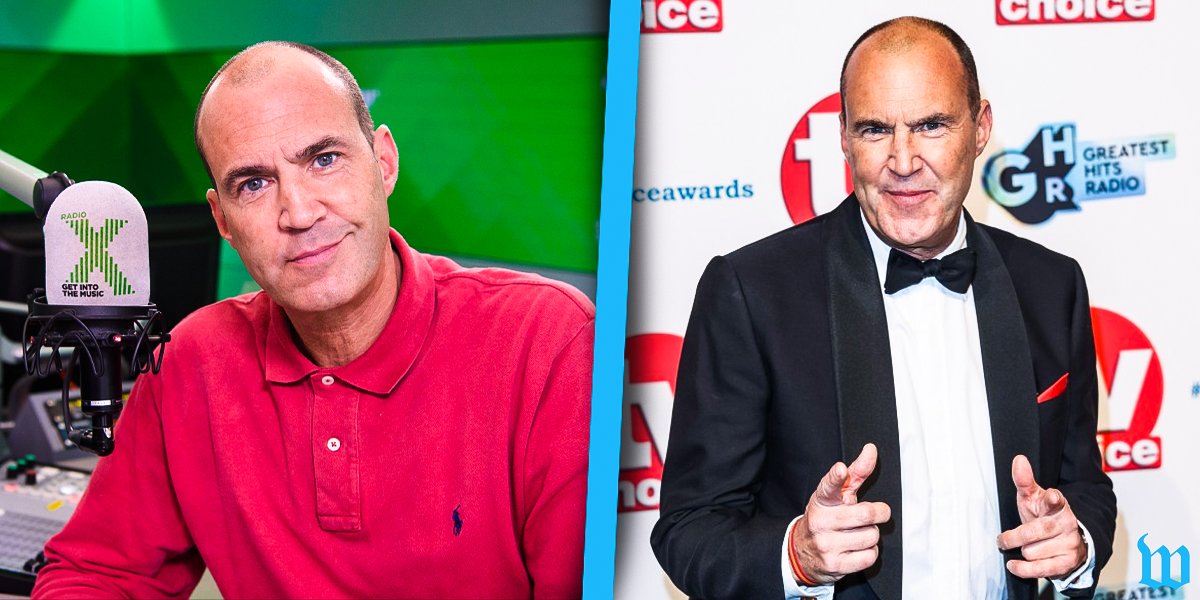
Johnny Vaughan was born as Jonathan Randal Vaughan on 16 July 1966 in Barnet, London, England. Growing up in North London, he was raised in a household shaped by two very different professional influences. His father worked as an engineer, while his mother practiced as a psychotherapist. That blend of technical discipline and psychological insight would later echo in his broadcasting style, where sharp structure meets instinctive understanding of people.
Now in his late fifty nine year old, Vaughan represents a generation of British presenters who witnessed the dramatic evolution of television and radio from analogue dominance to digital expansion. His early years were not defined by a clear path into media. Instead, they were marked by experimentation, missteps, and a restless personality that would eventually find its proper outlet behind a microphone and in front of a camera.
Standing approximately 6 feet tall, Vaughan has always carried a confident physical presence. With expressive features and an energetic delivery style, he developed an on-screen charisma that made him instantly recognisable. His appearance has evolved over the decades, yet his trademark intensity and quick reactions remain central to his public image.
Before his rise to national fame, Vaughan experienced a period of serious personal difficulty. As a young man, he faced legal trouble that resulted in a prison sentence. Rather than allowing that chapter to define him permanently, he emerged from it with a sharpened sense of direction. The experience became a private turning point, one that shaped his resilience and sense of urgency.
Many broadcasters arrive in media through steady, predictable routes. Vaughan’s entry felt different. It carried the energy of someone determined not to waste a second chance. That determination became visible in his work ethic and in the fearless tone he brought to live broadcasting.
Breaking Into Television
Vaughan’s early television career began with smaller presenting roles that allowed him to refine his voice. He demonstrated a natural ability to think quickly, react spontaneously, and maintain composure during live segments. These skills are not easily taught, and they quickly distinguished him from more scripted presenters.
His breakthrough arrived in 1997 when he became the main presenter of Channel 4’s morning programme The Big Breakfast. The show was already established, but Vaughan injected a new momentum into it. Paired with Denise van Outen, he formed a presenting partnership that became one of the most memorable duos in British breakfast television.
The chemistry between them was lively, irreverent, and unpredictable. Their exchanges felt conversational rather than rehearsed, giving viewers the sense that they were watching genuine interactions unfold in real time. During this period, Vaughan became a household name. His face and voice were synonymous with late-1990s morning television.
Life After The Big Breakfast
Success on a flagship programme can be both a blessing and a challenge. After leaving The Big Breakfast, Vaughan explored a variety of projects in television and entertainment. He appeared in additional presenting roles and took on creative ventures, including writing and acting work.
While not every project achieved the same cultural impact as his breakfast television years, they demonstrated his willingness to experiment. Rather than remaining tied to a single identity, Vaughan gradually began shifting toward a format that would define the next major phase of his career: radio.
Reinvention Through Radio
Radio proved to be more than a transition. It became Vaughan’s long-term platform. Hosting Capital Breakfast on 95.8 Capital FM from 2004 to 2011, he established himself as a leading voice in morning radio. The slot demanded consistency, stamina, and daily originality. Maintaining audience engagement over several hours each weekday requires both discipline and personality, and Vaughan delivered both.
His broadcasting style on radio retained the spontaneity that made him popular on television. Listeners responded to his conversational tone, humour, and ability to move seamlessly between light entertainment and more grounded discussions. The absence of cameras did not diminish his presence. If anything, it sharpened it.
The Radio X Era
In later years, Vaughan became a defining voice on Radio X, hosting the weekday drivetime show as well as the Saturday football programme The Kickabout. Drivetime radio occupies one of the most competitive positions in UK broadcasting. It captures commuters at the end of long workdays and demands a balance between energy and familiarity.
Vaughan’s approach in this slot reflects his maturity as a broadcaster. He combines structured segments with free-flowing banter, often interacting with co-hosts in a way that feels both spontaneous and tightly timed. His longevity in radio underscores his adaptability in an industry that has shifted dramatically with the rise of streaming and digital platforms.
Writing and Film Criticism
Beyond presenting, Vaughan has built a parallel reputation as a film critic. His regular film reviews demonstrate another dimension of his professional identity. Criticism requires clarity of thought and confidence in opinion, and Vaughan’s writing voice mirrors the directness heard in his broadcasting.
Balancing radio commitments with written commentary shows a versatility that extends beyond personality alone. It highlights his broader engagement with popular culture and entertainment analysis.
Personal Life and Family
Johnny Vaughan married costume designer Antonia Davies in August 1999. The marriage later ended, but it marked an important period in his personal life. In recent years, he has been in a long-term relationship with Vanessa Howard.
Vaughan is also a father. While details about his children are kept largely private, fatherhood has been referenced as a meaningful part of his life beyond the studio. Unlike some public figures who share every aspect of family life, he has generally maintained a protective boundary around his home life.
This balance between public persona and private responsibility contributes to the sense that Vaughan’s confidence on air is grounded in real-world commitments. It reinforces the idea that broadcasting is his profession, not his entire identity.
Physical Presence and Style
At approximately 1.83 metres tall, Vaughan’s physical stature complements his energetic communication style. Over the years, his look has matured from the playful sharpness of 1990s television to a more relaxed, seasoned appearance suited to radio and public events.
His wardrobe choices often reflect practicality rather than spectacle. Whether in studio settings or public appearances, he presents himself with understated confidence. The emphasis has always been on personality rather than presentation.
Net Worth and Professional Success
Estimates commonly place Johnny Vaughan’s net worth at around seven million dollars. While such figures are approximations rather than confirmed financial statements, they reflect the cumulative success of decades in high-profile broadcasting roles.
Income streams from television presenting, long-running radio contracts, writing work, and related media engagements contribute to this financial standing. Sustained visibility across multiple formats suggests careful career management and enduring audience appeal.
Public Image and Reputation
Vaughan’s public image is shaped by wit, candour, and resilience. He is known for quick comebacks, bold humour, and a willingness to engage in lively exchanges. At the same time, his career demonstrates endurance rather than fleeting popularity.
Over more than three decades, he has navigated shifts in media culture, public expectations, and technological change. That continuity signals professionalism and adaptability. Not every broadcaster successfully transitions from television to radio while retaining relevance. Vaughan achieved precisely that.
Social Media Presence
In the digital era, public figures are often measured by their online presence as much as by traditional media appearances. Vaughan maintains an active Instagram account under the handle @johnny_vaughan66. His posts typically blend studio moments, promotional material, and informal snapshots that reflect his personality.
Unlike highly curated celebrity feeds, his social media presence feels consistent with his broadcasting voice. It reinforces connection without overwhelming followers with constant personal exposure.
Faith and Personal Reflection
Another dimension of Vaughan’s life includes his conversion to Catholicism in 1999. Faith has been referenced as an important personal element, particularly during periods of change and transition. While he does not foreground religion in his broadcasting, it remains part of his broader life narrative.
Such aspects of identity often deepen public understanding of a personality who might otherwise be reduced to soundbites and studio banter.
Longevity in British Broadcasting
What ultimately distinguishes Johnny Vaughan is longevity. British media has witnessed rapid turnover in presenting talent, yet he remains a steady presence. From morning television in the 1990s to drivetime radio in the 2020s, his voice has adapted without losing its core character.
Longevity in broadcasting is rarely accidental. It requires audience trust, institutional confidence, and personal resilience. Vaughan’s journey demonstrates all three. He transformed early adversity into momentum, converted television fame into radio authority, and sustained relevance across generations of listeners.
A Lasting Legacy
Johnny Vaughan’s story is not simply about celebrity. It is about reinvention and durability. Born in 1966 in London, standing tall at six feet, balancing family life with professional intensity, and building an estimated multi-million-dollar career, he represents a particular strand of British broadcasting history.
His journey reflects the power of second chances and the importance of adaptability in creative industries. Whether heard through morning speakers or afternoon car radios, his voice carries decades of experience. That continuity ensures his place as one of Britain’s enduring broadcasting figures.
Johnny Vaughan was born on 16 July 1966, which places him in his late fifty nine year old. His long career in television and radio spans more than three decades.
How tall is Johnny Vaughan?
He stands at approximately 6 feet tall (1.83 metres). His height and energetic delivery have contributed to his strong on-screen and in-studio presence.
What is Johnny Vaughan’s net worth?
His estimated net worth is around $7 million. This figure reflects earnings from television presenting, major radio contracts, writing work, and related media projects.
Is Johnny Vaughan married?
He was previously married to costume designer Antonia Davies. In recent years, he has been in a long-term relationship while keeping much of his private life away from public exposure.
What does Johnny Vaughan do now?
He currently hosts the weekday drivetime show on Radio X and presents the football programme The Kickabout. He also continues his work as a film critic.