
Life Style
Scent as Experience: Why Candles Matter in Sustainable Home Rituals

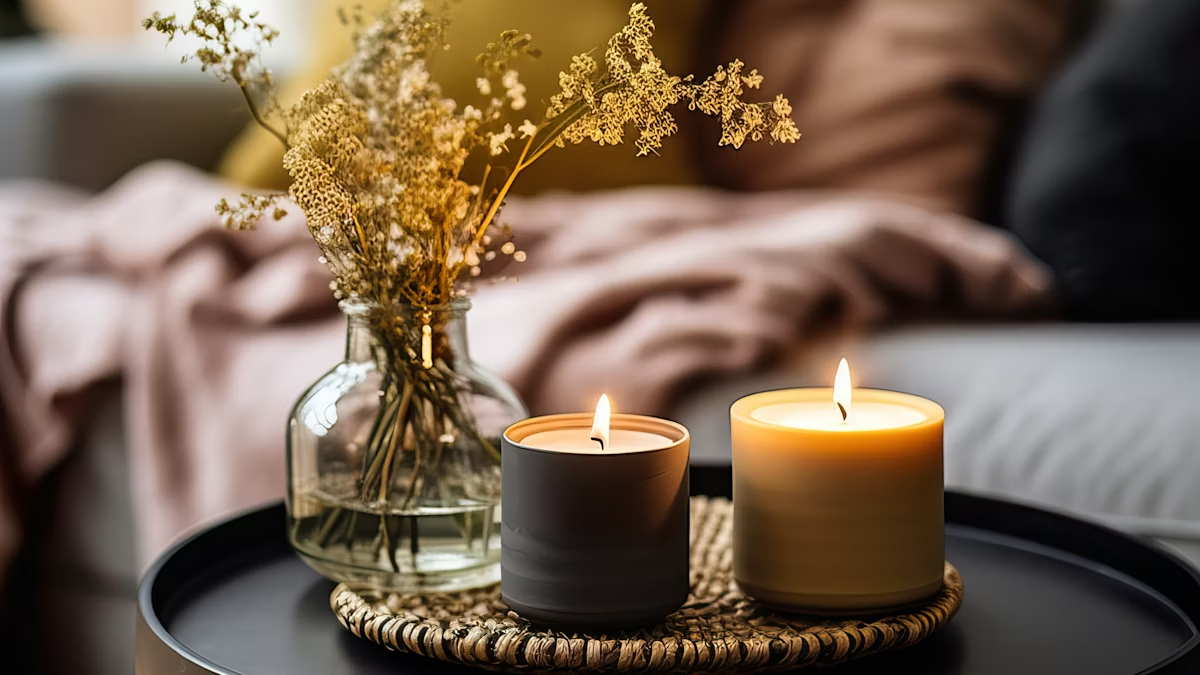
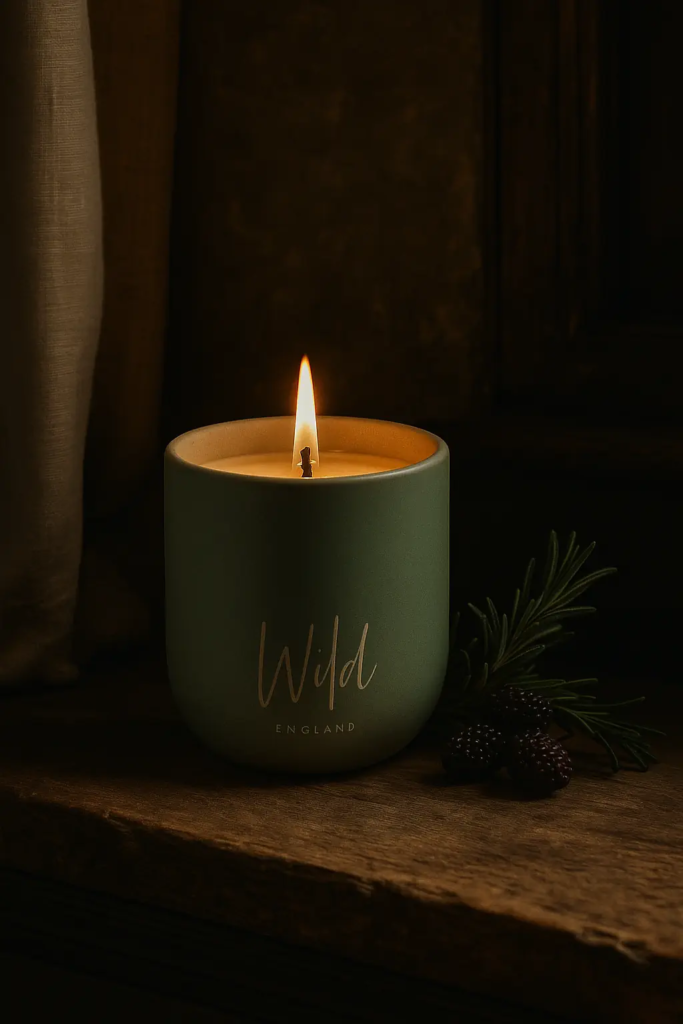
In the post-acceleration economy of constant digital exposure, the home has re-emerged as a site of deliberate ritual rather than passive occupation. This shift has reframed domestic objects not as background décor, but as functional instruments shaping mood, cognition, and behaviour. A mulberry rosemary candle, in particular, occupies a unique position within this renewed domestic logic. They operate simultaneously at the sensory, psychological, and symbolic level, converting abstract ideas of calm, focus, or comfort into embodied experience.
Within sustainable lifestyles, candles are no longer indulgent accessories. They have become tools of intentional living, especially when produced through low-impact materials, ethical labour, and transparent sourcing. In this context, scent is not superficial; it is structural.
How Scent Influences Mood and Space
Olfactory perception bypasses rational filtering and connects directly to the limbic system, the neurological centre governing memory, emotion, and autonomic response. This is why scent has a disproportionate effect on perceived atmosphere. A carefully formulated candle does more than perfume a room; it modulates stress response, circadian rhythm cues, and spatial perception.
Natural fragrance compositions based on essential oils differ fundamentally from synthetic accords. They volatilise at variable rates, creating layered diffusion rather than a flat, persistent odour. This dynamic release mirrors natural environments and reduces sensory fatigue, a common issue with petroleum-derived fragrance oils.
Natural Wax vs Synthetic Alternatives
The carrier medium of a candle determines both its environmental impact and its performance characteristics. Paraffin wax, a petroleum by-product, combusts inconsistently and releases trace pollutants. By contrast, a soy wax candle or other plant-based wax burns at a lower temperature, extends burn time, and produces minimal soot. From a lifecycle perspective, natural waxes are renewable, biodegradable, and aligned with broader eco home products standards.
Mulberry & Rosemary: A Modern Botanical Blend
The pairing of mulberry and rosemary represents a contemporary interpretation of botanical aroma. Mulberry introduces a dark, subtly tart fruit note with soft tannic depth, while rosemary contributes a sharp, herbaceous volatility associated with cognitive clarity and alertness. Together, they form a balanced olfactory profile that is neither overtly sweet nor aggressively aromatic.
This composition is particularly effective in transitional spaces, living areas, studies, or evening dining environments, where scent must support presence without dominating attention. The result is an atmosphere that feels grounded, cultivated, and distinctly modern, positioning the mulberry rosemary candle as a functional object rather than a decorative afterthought.
How Wild England Approaches Limited-Edition Craftsmanship
Small-batch candle production allows for tighter control over wax blending ratios, wick calibration, and fragrance load – variables that directly affect burn consistency and scent throw. As a British-made brand, Wild England benefits from local production infrastructure that prioritises precision over scale. Short supply chains reduce transport emissions and enable real-time quality assurance.
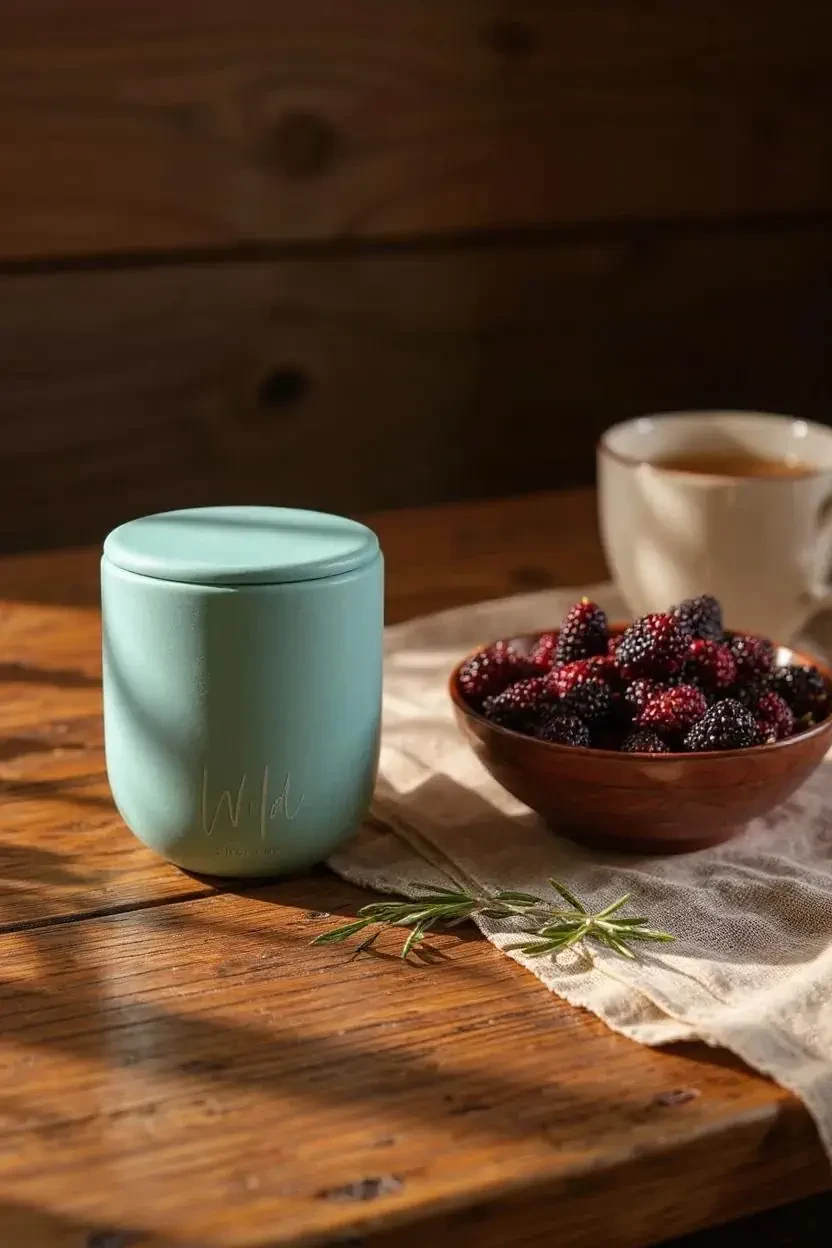
Limited-edition releases further reinforce sustainability by avoiding overproduction and inventory waste. Each candle is the outcome of intentional design decisions rather than mass replication, aligning with principles of sustainable design and conscious consumption.
Choosing Candles That Align With Sustainable Values
Selecting a candle that genuinely supports a sustainable lifestyle requires scrutiny beyond surface claims. Material origin, formulation transparency, and packaging strategy all matter. Consumers increasingly expect candles to meet the same ethical standards as natural body care or sustainable personal care products.
Key criteria that distinguish responsible candle design include:
- Plant-based waxes with clean burn profiles and low environmental impact
- Fragrance systems based on essential oils or responsibly developed natural compounds
- Vegan and cruelty-free certification, excluding animal-derived additives
- British or local production supporting ethical labour and reduced transport emissions
- Recyclable or reusable packaging that avoids mixed-material waste
These attributes are not symbolic; they directly influence indoor air quality, waste generation, and long-term environmental load.
Conclusion: Meaningful Design Beyond Decoration
Candles occupy a deceptively simple role within the home, yet their cumulative impact is significant. When crafted with natural ingredients, ethical intent, and design intelligence, they become anchors for daily ritual rather than disposable luxuries. British-made quality ensures accountability. Sustainability at the core, through recyclable materials and zero-waste thinking, aligns domestic comfort with environmental responsibility. Vegan and cruelty-free standards reinforce ethical consistency across categories, from toiletries to home fragrance.
Wild England’s broader commitment to transparent sourcing, refill culture, and circular living positions its candle collections within a coherent ecosystem of natural home accessories and sustainable habits. The mulberry and rosemary blend exemplifies how scent can express place, season, and intention without compromise.
If you are curating a home that reflects conscious values as much as aesthetic taste, explore Wild England’s limited-edition candle range and integrate scent into your rituals with clarity, restraint, and purpose.

Johnny Vaughan: The Journey of a British Broadcasting Icon

Max Casella: Early Life, Breakthrough Roles, and Personal Story

Robert Loggia: The Life and Legacy of a Hollywood Character Actor

Paul Fusco: Career, Height, Family, and Quick Facts

The Story of Justin Lin and His Rise in Hollywood

Alison Victoria Net Worth: From Chicago Designer to TV Star

Who Is Eddie Levert? The Life and Music of an R&B Pioneer

Best Vacuum Packing Bags for Travel: Small, Strong and Simple to Operate

Celebrating Body Confidence: Tips for Women at Every Stage of Life

Fernando Vargas Jr.: Age, Family, Boxing Career, and Life Story

Dixie Brubaker: Life Story of Dinesh D’Souza’s Former Wife

JOP Net Worth 2025: How Rich Is the Fuerza Regida Frontman?

Rouba Saadeh: Life, Career, and Everything About Michele Morrone’s Ex-Wife

All About David Rubulotta – Age, Career, Family, and Life with Erin Burnett

Who Is Rebecca Romney? Life, Work, and Personal Story

Who is Harry Joseph Letterman? Facts About David Letterman’s Son

Who Is Terrence Duckett? Facts About Jasmine Guy’s Ex-Husband

Cindy Costner Net Worth – Inside the Life of Kevin Costner’s First Love

All About Ryan McPartlin: Career, Acting, Family, and More

Who is Jason The Ween? Bio, Career, Age, and More
Johnny Vaughan: The Journey of a British Broadcasting Icon
Max Casella: Early Life, Breakthrough Roles, and Personal Story
Robert Loggia: The Life and Legacy of a Hollywood Character Actor
Paul Fusco: Career, Height, Family, and Quick Facts
The Story of Justin Lin and His Rise in Hollywood
Alison Victoria Net Worth: From Chicago Designer to TV Star
Who Is Eddie Levert? The Life and Music of an R&B Pioneer
Best Vacuum Packing Bags for Travel: Small, Strong and Simple to Operate
Celebrating Body Confidence: Tips for Women at Every Stage of Life