
Health
How CPT-1 Inhibitor Etomoxir (Sodium) Reduces CNS Inflammation

Cells are the building blocks of life. A group of them creates tissue; a group of tissues creates an organ; and a group of organs creates a system. The Central Nervous System, for instance, consists of two major organs – the brain and the spinal cord.
While cells are at the core of everything and there are healthy and beneficial ones, the presence and/or active participation of certain kinds spell bad news. Central Nervous System (CNS) inflammation is a good example. Certain cells bypass the BBB and then harm CNS tissue, causing this effect.
Microglia, Astrocytes, T Cells (T lymphocytes), B Cells, Neutrophils, and Macrophages are all examples of cells that can have this adverse effect. Researchers have conducted studies and experiments that are showing that Etomoxir sodium salt CPT-1 inhibitor may be a viable way to address this concern. Read on as this article explains this in the simplest possible way.
Etomoxir – The Powerful CPT-1 Inhibiting Agent
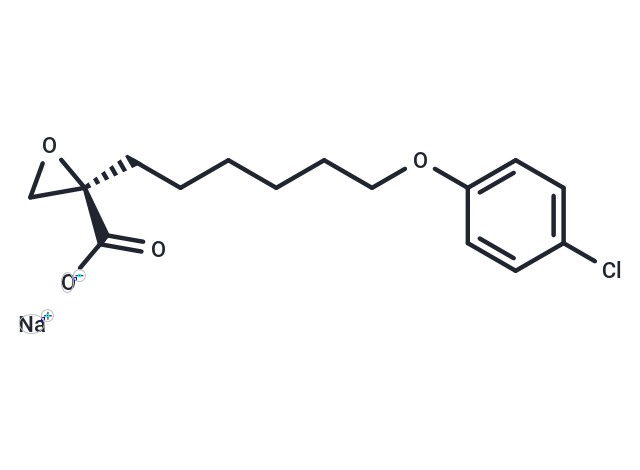
Scientists essentially use Etomoxir for research purposes. It has proven very valuable, especially for research to discover the relationship between complications like CNS inflammation and fat-burning metabolism.
Its major role is disrupting the fat-burning process, which usually provides the body’s primary source of energy. It does this by blocking immune and non-immune support cells, like:
- T Cells (T lymphocytes)
- B Cells
- Microglia
- Astrocytes
- Neutrophils
These can cause complications like Stroke, Multiple Sclerosis, and some other CNS-related complications when they access the CNS tissue. This simple chemical compound can stop these from passing the Blood-Brain Barrier.
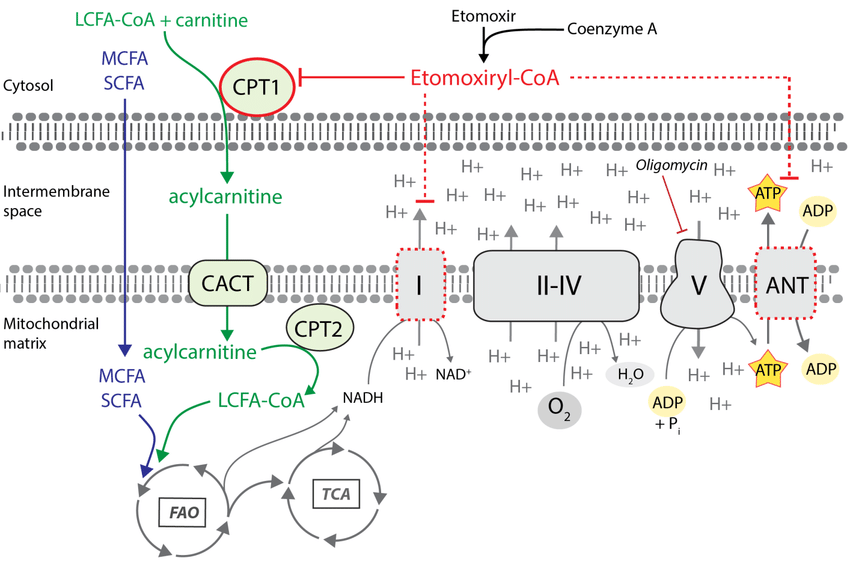
More specifically, it does this by inhibiting CPT-1 activity. CPT-1 is a major enzyme that moves fatty acids to where they become energy. Etomoxir thereby starves the cells mentioned above and several others of the fatty acid they require for activation. This impedes not only their activation but also their multiplication.
However, it is worth stressing that scientists essentially use Etomoxir for research purposes. This is as opposed to considering it a real medicine. Although it once was a medicine, its significant toxicity forced its use solely for research purposes.
It is particularly toxic to the liver. For more on this, you can check: https://www.nature.com/.
How the Etomoxir Drug Works
Although they are minute and life’s building blocks, cells are made up of various things. Most (not all) types include a membrane known as mitochondria. This applies to the immune and non-immune support cells mentioned above and several others.
You can liken this membrane to the cell’s powerhouse, as it converts fuel into energy. By the way, fuel can come in the form of glucose, but it is usually fatty acids.
The cells responsible for causing CNS inflammation need to convert fatty acids into energy for their sustained activation and reproduction. Etomoxir cuts the supply of fatty acids to them. It does this by preventing the CPT-1 enzyme from transporting fatty acids to the mitochondrial membrane, where energy conversion happens. So what happens then?
The cells, which use fatty acids for energy conversion, have to rely on an alternative fuel source. This alternative happens to be sugar (glycolysis), but this then changes a lot.
For starters, the energy balance changes, and this makes the immune and non-immune support cells responsible for CNS inflammation less active. However, serious caution is of the essence.
This is because of the toxicity of Etomoxir, which calls for using the appropriate dose and no more. Doing otherwise can lead to some adverse effects.
You must also constantly ensure that the inhibition of the fat-burning process truly brings about the achieved results and nothing else. Once again, this is why it is essentially a chemical compound for research purposes.
Calming of CNS Inflammation
In addition to preventing autoimmune attacks that cause CNS inflammation, Etomoxir can help calm such inflammation. It does this by:
Cutting the Supply of Fatty Acids to T lymphocytes
It is not the only immune support cell capable of causing CNS inflammation. However, it is high on the list. Deactivating the T lymphocytes does a lot for calming CNS inflammation, and Etomoxir performs this action.
It particularly starves these overactive T lymphocytes of the required fatty acid. Doing this successfully would have three implications:
Change in Toxic Release
The autoimmune effects come from their production of certain chemicals that have inflammatory effects – IL-17 and IFN-γ. Although the lack of fatty acids (that Etomoxir causes) might not necessarily end existence, it significantly changes the dynamics.
Among other things, it ensures a massive reduction in the number of these inflammatory chemicals produced. As a result, they make the Central Nervous System less toxic.
Apoptosis
T Cells heavily rely on fatty acids as their fuel source. While many others can adapt to the use of secondary fuel sources for energy conversion, they are not so adaptive.
The consistent lack of fatty acids can lead to a state of apoptosis, which simply means cell death. At the very least, they cannot develop to the point where they become aggressive to the central nervous system.
Reduced Clonal Expansion
Fatty acid supplies T Cells with the energy they require for their full activation. However, fatty acid also plays a key role in enabling their multiplication. They are actually the building blocks required for this process.
Therefore, starving them of fatty acids can stop their reproduction (proliferation or clonal expansion). Most importantly, this protects vulnerable CNS parts like the nerve tissue and myelin. Attacks on these parts usually cause CNS inflammation.
Limited Activation of Myeloid Cells
Myeloid cells perform the crucial role of homeostasis. This means cleaning up damaged tissue and ensuring a well-maintained, healthy body.
However, their over-activation can make things go bad. Chronic complications like neuroinflammation or autoimmune disorders can set in, especially if this remains the case for a long while.
This is because they damage healthy cells while at work. Researchers can use Etomoxir to address their excessive activation. Overall, it can make the CNS less hostile, thereby resulting in significantly reduced tissue damage.
Conclusion
While studies are still ongoing, there are increasing outcomes that show that Etomoxir can help prevent and manage CNS inflammation by inhibiting the CPT-1 enzyme. This action deprives the immune and non-immune support cells of what they require to cause CNS inflammation. However, this compound has toxicity concerns, and will therefore require immense care if it has to be used.

Why You Need Strength Training for Muay Thai

Smart Cooling: Preparing for the Next Wave of Dense IT Loads

Flower Delivery Warsaw Poland Beyond the Bouquet: Plants, Luxury Flowers and Stems

Karen Lynch and Elizabeth Taylor: Two Remarkable Careers

Safra Catz and John Stankey: Business Careers and Personal Lives

Engineered Hardwood or Solid Wood Flooring for Your Home

9 Signs Your Automatic Watch Collection Needs a Watch Winder

When Should You See a Neurosurgeon? Symptoms, Conditions, and What to Expect

Why London-Based Companies Need a More Integrated Approach to Security and Business Travel

Women’s Health Through Every Stage of Life – Why Personalized Care Matters

Dixie Brubaker: Life Story of Dinesh D’Souza’s Former Wife

JOP Net Worth 2025: How Rich Is the Fuerza Regida Frontman?

Who Is Khalyla Kuhn? Life, Family, and Career of Bobby Lee’s Partner

Jaidyn Alexis Age: How the Star Balances Motherhood, Music, and Fame

Rouba Saadeh: Life, Career, and Everything About Michele Morrone’s Ex-Wife

All About David Rubulotta – Age, Career, Family, and Life with Erin Burnett

Who is Harry Joseph Letterman? Facts About David Letterman’s Son

Who Is Rebecca Romney? Life, Work, and Personal Story

Cindy Costner Net Worth – Inside the Life of Kevin Costner’s First Love

Who Is Terrence Duckett? Facts About Jasmine Guy’s Ex-Husband
Why You Need Strength Training for Muay Thai
Smart Cooling: Preparing for the Next Wave of Dense IT Loads
Flower Delivery Warsaw Poland Beyond the Bouquet: Plants, Luxury Flowers and Stems
Karen Lynch and Elizabeth Taylor: Two Remarkable Careers
Safra Catz and John Stankey: Business Careers and Personal Lives
Engineered Hardwood or Solid Wood Flooring for Your Home
9 Signs Your Automatic Watch Collection Needs a Watch Winder
When Should You See a Neurosurgeon? Symptoms, Conditions, and What to Expect
Why London-Based Companies Need a More Integrated Approach to Security and Business Travel