
Life Style
A Sociological Look at Discord Study Groups and Gen Z Lifestyle

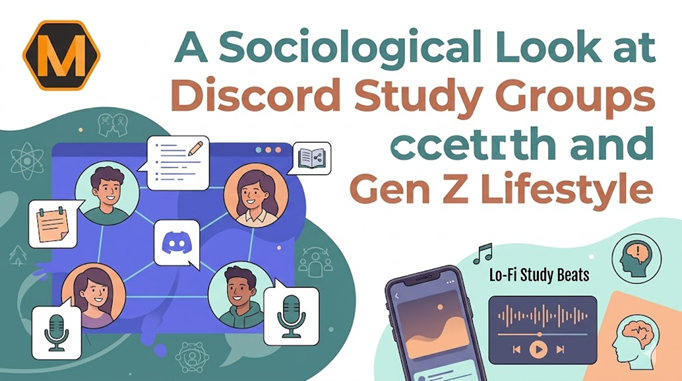
The traditional image of a university student—hunched over a wooden desk in a silent, dusty library—is rapidly becoming a relic of the past. For Gen Z, the modern “campus” isn’t just a physical location; it’s a persistent, digital ecosystem. At the heart of this shift is the rise of Discord study groups. Originally designed for gamers, Discord has been repurposed by students into sophisticated “digital lounges” where academic labor, social identity, and lifestyle choices converge. This transition isn’t just about convenience; it represents a fundamental sociological shift in how a generation perceives community and collective intelligence.
Understanding these digital spaces requires looking through a sociological lens. We see the emergence of “micro-communities” that mirror traditional social structures but function with greater fluidity. In these servers, students are not just sharing notes; they are constructing a shared reality. However, navigating the high-pressure environment of modern higher education often requires more than just a peer group. Many students find that balancing a vibrant digital lifestyle with rigorous academic expectations is a complex act, leading them to seek professional support from an assignment writing service to maintain their GPA while staying active in their online communities.
The Rise of the “Third Place” in the Digital Age
Sociologist Ray Oldenburg once famously described the “third place”—a social environment separate from the two usual social environments of home (“first place”) and the workplace (“second place”). For Gen Z students, Discord has become the definitive digital third place. Unlike the sterile environment of a Learning Management System (LMS) like Canvas or Blackboard, Discord servers are high-context environments. They are filled with custom emojis, inside jokes, and specialized channels for everything from “venting about exams” to “sharing lo-fi study beats.”
This lifestyle choice reflects a desire for informal learning. In a Discord group, the hierarchy between “expert” and “learner” is often flattened. A sophomore might explain a complex theory to a senior, breaking down barriers that exist in traditional lecture halls. This peer-to-peer exchange fosters a sense of belonging that is crucial for mental well-being, especially in 2026 where digital connection is a core pillar of student life.
Sociology, Discord, and Collective Intelligence
From a functionalist perspective, Discord study groups serve a vital purpose: they manage the overwhelming flow of information. Sociology teaches us that humans naturally organize into groups to solve problems that are too large for an individual. When a professor assigns a dense, 50-page reading on structural functionalism, a Discord server might split the work, with different channels dedicated to summarizing specific sections.
| Sociological Concept | Application in Discord Study Groups |
| Social Capital | Students gain “credits” and respect by helping others and sharing resources. |
| Symbolic Interactionism | The use of specific memes and “slang” to create a unique group identity. |
| Collective Intelligence | The group’s combined knowledge exceeds that of any single member. |
| Digital Stratification | How access to high-speed internet or tech affects a student’s ability to participate. |
This collaborative environment is particularly helpful when tackling complex subjects. For example, a student struggling with the nuances of urban sociology or social stratification might benefit from real-time discussions. When the complexity of a term paper becomes unmanageable, utilizing specialized sociology assignment help from Myassignmenthelp can provide the necessary academic framework to help a student contribute more effectively to their digital study group. This blend of peer support and expert guidance is a hallmark of the Gen Z academic strategy.
The “Always-On” Lifestyle and Academic Burnout
While Discord offers community, it also introduces the “always-on” phenomenon. Sociologists have long studied the “blurring of boundaries” between different life spheres. For a Gen Z student, their phone is a constant portal to their social and academic world. Notifications from a study group can arrive at any hour, creating a lifestyle where one never truly “leaves” school. This constant connectivity can lead to a specific type of digital burnout.
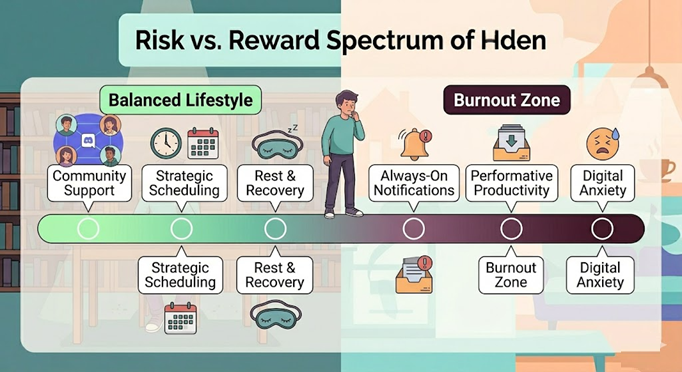
The sociological impact here is the pressure of performative productivity. Students often feel the need to show they are “grinding” or “hustling” by being active in the server at all hours. This creates a culture where sleep and leisure are sometimes sacrificed for the appearance of academic dedication. Recognizing the signs of this burnout is essential. Modern students are increasingly prioritizing “soft living”—a movement that rejects the glorification of stress in favor of strategic support and mental rest.
Deconstructing the Digital Identity
In these servers, students also engage in identity work. On Discord, you aren’t just a student ID number; you are a username with a profile picture and a “status.” This allows for a level of self-expression that traditional classrooms lack. Sociology helps us understand that these digital identities are not “fake”; they are curated versions of the self that allow students to navigate social anxieties.
For many, the digital lounge is a safe space to ask “stupid” questions. The distance provided by a screen reduces the “social cost” of admitting confusion. This is particularly important for first-generation students who may feel out of place in elite academic institutions. The Discord server becomes a leveling ground where the focus is on the shared goal of academic progression.
The Globalization of the Student Experience
One of the most profound sociological shifts driven by Discord is the globalization of the student lifestyle. A student in London can be in the same study server as a student in New York or Sydney. This cross-cultural exchange enriches the academic experience, providing diverse perspectives on global issues. When discussing social policy or international relations, having a peer from a different continent provides “information gain” that a textbook simply cannot replicate.
This global tone is essential for the modern graduate. The workforce they are entering is interconnected, and the “digital soft skills” they learn on Discord—moderating conflict and communicating across time zones—are just as valuable as the degrees they are earning. The lifestyle of a 2026 student is defined by this hybridity: half-physical, half-digital, and entirely global.
FAQ: Navigating the New Academic Lifestyle
Q.1 Is Discord a distraction or a tool for students?
Ans: It functions as both. While it provides a platform for collaboration, the constant notifications can lead to multitasking. Successful students set “Do Not Disturb” hours to protect deep focus.
Q.2 How can I find a reliable Discord study group?
Ans: Many universities have “Student Hubs” on Discord where you can find verified servers for specific majors. You can also look for “Study with Me” communities that offer moderated environments.
Q.3 Why is sociology relevant to a student’s daily life?
Ans: It helps you understand the hidden “rules” of your social groups, how your identity is shaped by your digital environment, and why certain academic pressures exist.
Q.4 What is “Information Gain” in content?
Ans: It refers to providing new, unique insights that aren’t already available in other articles. Google rewards content that adds value to the conversation rather than just repeating common facts.

A Sociological Look at Discord Study Groups and Gen Z Lifestyle

Transforming Your Bedroom into a Personal Sanctuary: A Woman’s Guide to Style and Function in 2026

How The Best Laser For Wrinkles Can Transform Your Skincare Routine

7 Benefits of Hearing Aid in Malaysia for Seniors

Scott Patterson’s First Wife, Vera Davich: Everything You Need to Know

All About Shaherah White: Barry White’s Daughter, Family, and Journey

Understanding Investment Thresholds for Permanent cand Citizenship Pathways

Who Is AJ Lambert? Her Career, Style, and Legacy

Daniella Liben’s Journey: Family, Career, and Life With Adam Pally

6 Ways Dentist In Bensalem, PA Helps Maintain Oral Health

Dixie Brubaker: Life Story of Dinesh D’Souza’s Former Wife

JOP Net Worth 2025: How Rich Is the Fuerza Regida Frontman?

Rouba Saadeh: Life, Career, and Everything About Michele Morrone’s Ex-Wife

All About David Rubulotta – Age, Career, Family, and Life with Erin Burnett

Who Is Rebecca Romney? Life, Work, and Personal Story

Who is Harry Joseph Letterman? Facts About David Letterman’s Son

Who Is Terrence Duckett? Facts About Jasmine Guy’s Ex-Husband

Cindy Costner Net Worth – Inside the Life of Kevin Costner’s First Love

All About Ryan McPartlin: Career, Acting, Family, and More

Who Is Khalyla Kuhn? Life, Family, and Career of Bobby Lee’s Partner
A Sociological Look at Discord Study Groups and Gen Z Lifestyle
Transforming Your Bedroom into a Personal Sanctuary: A Woman’s Guide to Style and Function in 2026
How The Best Laser For Wrinkles Can Transform Your Skincare Routine
7 Benefits of Hearing Aid in Malaysia for Seniors
Scott Patterson’s First Wife, Vera Davich: Everything You Need to Know
All About Shaherah White: Barry White’s Daughter, Family, and Journey
Understanding Investment Thresholds for Permanent cand Citizenship Pathways
Who Is AJ Lambert? Her Career, Style, and Legacy
Daniella Liben’s Journey: Family, Career, and Life With Adam Pally