
Life Style
How Garden Rooms Help Women Create a Private Retreat and Better Work–Life Balance

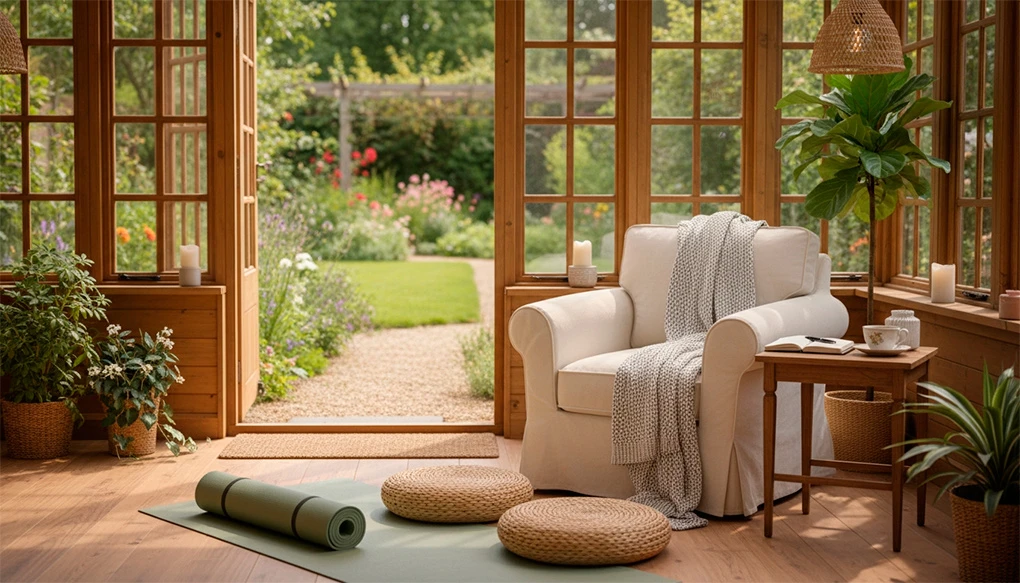
Modern life asks a lot of women. Many juggle careers, children, ageing parents, housework and relationships, often from the same table or sofa. When your laptop, laundry basket and to‑do list all share one room, it becomes hard to switch off or feel that any space truly belongs to you.
A garden room offers a gentle but powerful alternative. Instead of moving house or starting a major renovation, you can create a small, dedicated space at the bottom of the garden, close enough to be practical, but separate enough to feel like your own private world. It can be a place to work, rest, stretch, read, create or simply breathe.
Why Personal Space Matters for Women’s Wellbeing
Constant multitasking is draining. Many women find themselves answering work messages while cooking, thinking about deadlines during the school run, and mentally planning tomorrow’s schedule when they should be winding down for bed.
Over time, this can lead to:
- Chronic stress – your environment constantly reminds you of jobs to be done.
- Burnout – especially for those combining paid work with caring responsibilities.
- A blurred sense of self – you are always in a role (mother, partner, colleague), rarely just yourself.
A dedicated physical space helps to draw a line. When you walk into a particular room to read or stretch or write, you’re signalling to yourself that this time is different. Moving that room out into the garden reinforces that signal: the walk down the path becomes a small but meaningful transition from “doing for others” to “being with yourself”.
What Is a Garden Room and Why It Suits a Women‑Only Space
A garden room is a standalone building in your garden, designed as a comfortable, usable room rather than simple storage. Unlike a basic shed, it’s insulated, has proper windows and doors, and is intended for year‑round use.
It’s very different from:
- A shed – usually filled with tools, boxes and bicycles, not somewhere you’d want to relax.
- A desk in the corner of the living room – permanently surrounded by noise, clutter and interruptions.
As a women‑only space, a garden room has some clear advantages:
- It is physically separate from the main house, so it naturally feels calmer and more contained.
- You can design it entirely around your taste: colours, textures, scents, art and furniture that make you feel grounded and comfortable.
- You choose how it’s used: whether that’s focused work, quiet rest, creativity or a blend of all three.
Even a small footprint can feel like a studio rather than “extra storage”, if it’s planned with intention.
Everyday Ways to Use a Garden Room
A Calm Home Office With a Clear “End of Day”
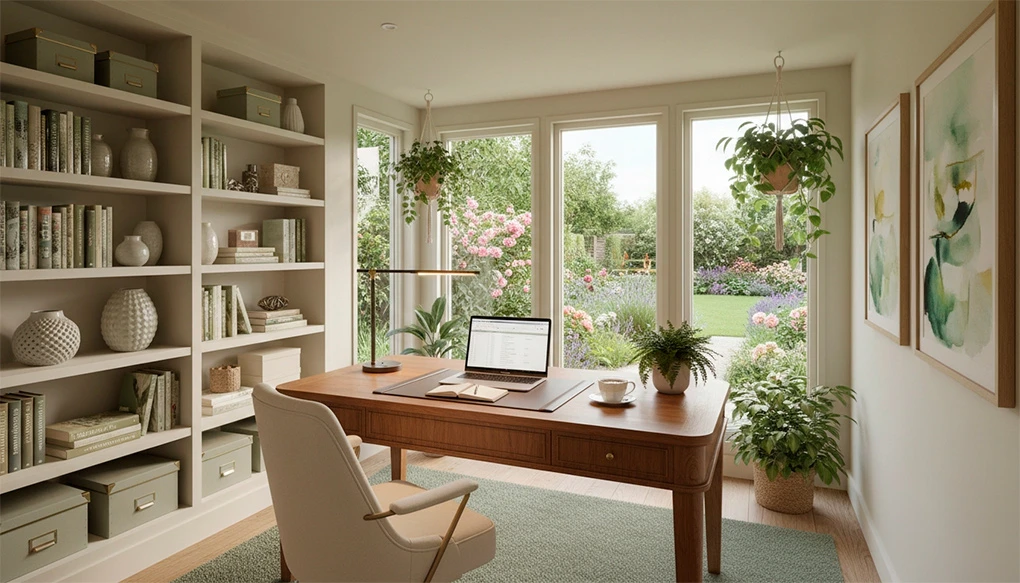
For women who work from home – freelancers, employees on hybrid patterns, business owners – a garden office can transform the feel of the working week.
- During the day, it’s a focused space for calls, deep work and planning.
- At the end of the day, you close the door, walk back to the house and leave work behind physically as well as mentally.
- Inside the home, the dining table returns to being a place for meals and conversation, not spreadsheets and meetings.
That small separation can reduce the “always on” feeling that many home‑workers experience.
A Self‑Care Studio for Yoga, Reading and Mindfulness
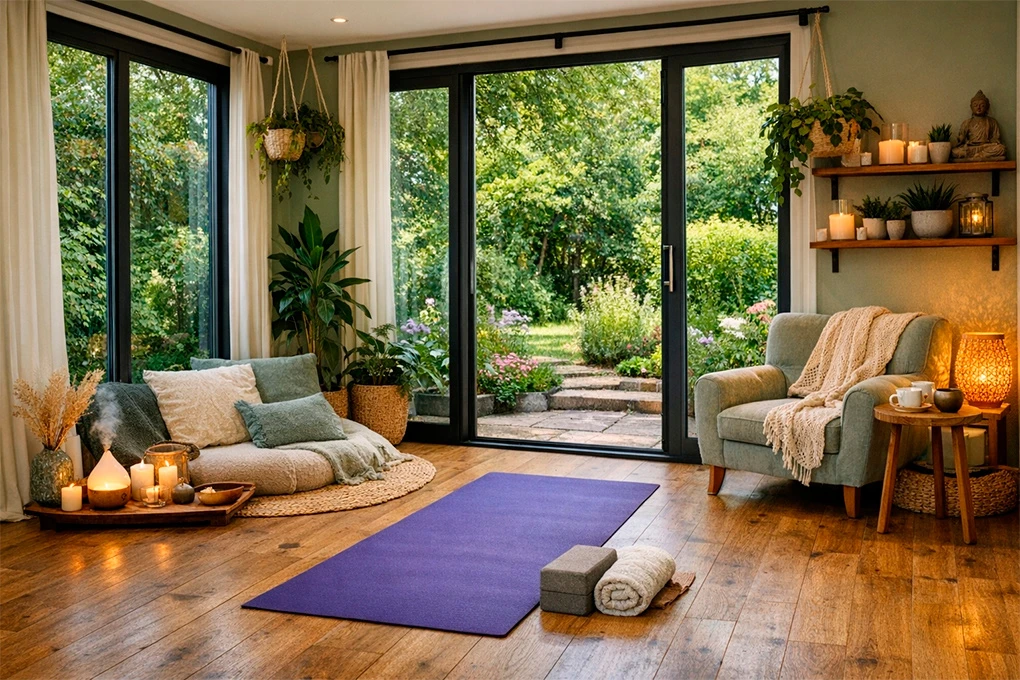
You may not need a full gym; you might just need a quiet room to stretch, breathe and think.
A simple self‑care retreat could include:
- a soft rug or yoga mat;
- a comfortable chair with a blanket;
- a side table for tea, candles or a journal;
- warm, low lighting;
- a couple of plants and a view of the garden.
Knowing that this is your place for 20 minutes of reading, meditation or gentle movement makes it easier to protect that time – especially when it’s one step removed from the busy house.
A Creative Workshop for Hobbies and Side Projects
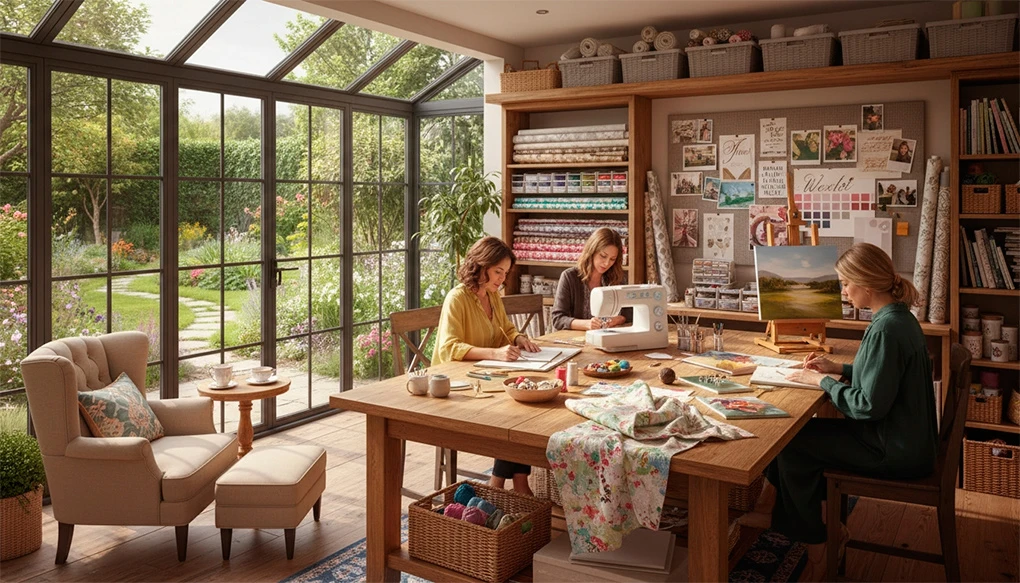
Creative hobbies are often the first thing to go when space is tight. A garden room can bring them back into your life:
- a sewing or craft studio with a big table and proper storage;
- a painting space where canvases can stay out;
- a writing, music or content‑creation room where your tools are always ready.
By giving your interests a physical home, you’re quietly telling yourself that they matter.
A Flexible Space for Friends, Teens and Guests
Although the retreat may be primarily yours, it can flex when you want it to:
- a cosy spot for coffee or wine with a friend;
- a relaxed, independent‑feeling hangout for a teenage daughter;
- a snug space for overnight guests, if the layout allows.
Because it’s slightly apart from the main house, it can feel more intimate and relaxed – perfect for deep conversations or film nights.
Designing a Retreat That Feels Like You
The strength of a garden room is that you can design it not just to be practical, but to support how you want to feel.
Consider:
- Colour and mood – soft neutrals, warm earthy tones or gentle pastels for calm; bolder accents in cushions, art or rugs if you enjoy more energy.
- Lighting – maximise natural light with well‑placed windows and doors, then add warm lamps, fairy lights or a dimmer switch to shift the atmosphere in the evening.
- Textures – throws, cushions, rugs and curtains instantly soften the space and make it feel like a proper room.
Even in a compact structure, it helps to define simple zones:
- a work corner with a desk, ergonomic chair and task lighting;
- a rest corner with an armchair or small sofa;
- hidden storage for equipment, paperwork or craft materials so clutter stays out of sight.
The structure itself matters. Good insulation, quality timber and well‑fitted windows and doors will decide whether your garden room feels inviting in winter or is only pleasant on mild days. For women who want something genuinely comfortable rather than temporary, dedicated timber garden retreats in the UK from specialists like Woodera can provide a solid, properly insulated base that you then personalise with your own décor.
If your focus is work and productivity, it may help to look at more office‑style layouts too. Compared with ad‑hoc DIY solutions, professionally designed insulated garden studios and home offices in England tend to make better use of space, wiring and natural light, which can be particularly valuable if you’re on video calls or working long hours.
First Steps Towards Your Own Garden Room
If the idea of a private retreat feels appealing but slightly overwhelming, start small.
- Choose the main purpose
Is this primarily for work, self‑care, creativity or a mix? Your answer will guide decisions on size, layout and furnishings.
- Pick the spot in your garden
Think about privacy, sunlight, views and how you’ll reach it in bad weather. Some people like a tucked‑away corner; others prefer a position that stays visually connected to the house.
- Set a realistic budget and footprint
A smaller, well‑built garden room is usually more satisfying than a large structure that compromises on materials. Plan enough room to move comfortably, but don’t overwhelm a modest garden.
- Plan essentials: power, heat, internet
Most retreats will need electricity and some form of heating. If you’ll work there, consider how you’ll get Wi‑Fi or a wired connection.
- Check basic rules
Many garden rooms can be built under permitted development, as long as they meet limits on size and placement. It’s always wise to check what applies where you live or speak with a professional.
From there, the fun part begins: choosing the interior details that make the space feel truly yours.
Final Thoughts: A Room That Says “You Matter Too”
On paper, a garden room is just another structure. In reality, for many women it becomes something more: a physical reminder that their time, energy and peace of mind are worth protecting.
Creating a small, beautiful room at the bottom of the garden is not selfish or extravagant. It’s a way of acknowledging that when you have somewhere to rest, think, move and create, you’re better able to show up for everyone else – and for yourself.

9 Signs Your Automatic Watch Collection Needs a Watch Winder

When Should You See a Neurosurgeon? Symptoms, Conditions, and What to Expect

Why London-Based Companies Need a More Integrated Approach to Security and Business Travel

Women’s Health Through Every Stage of Life – Why Personalized Care Matters

What Your Engagement Ring Shape Says About You: A Guide to Diamond Shape Meanings

Menopause Fitness Instructor Guide to Staying Strong and Healthy

Jememôtre: Meaning, Benefits, Uses, and Everything You Should Know

Clienage9 for PC: Setup, Features, and User Experience

What Is Southwest Free WiFi? Features, Availability, and Benefits

IronMartOnline Reviews: Features, Customer Opinions, and Trustworthiness

Dixie Brubaker: Life Story of Dinesh D’Souza’s Former Wife

JOP Net Worth 2025: How Rich Is the Fuerza Regida Frontman?

Who Is Khalyla Kuhn? Life, Family, and Career of Bobby Lee’s Partner

Jaidyn Alexis Age: How the Star Balances Motherhood, Music, and Fame

Rouba Saadeh: Life, Career, and Everything About Michele Morrone’s Ex-Wife

All About David Rubulotta – Age, Career, Family, and Life with Erin Burnett

Who is Harry Joseph Letterman? Facts About David Letterman’s Son

Cindy Costner Net Worth – Inside the Life of Kevin Costner’s First Love

Who Is Rebecca Romney? Life, Work, and Personal Story

Who Is Terrence Duckett? Facts About Jasmine Guy’s Ex-Husband
9 Signs Your Automatic Watch Collection Needs a Watch Winder
When Should You See a Neurosurgeon? Symptoms, Conditions, and What to Expect
Why London-Based Companies Need a More Integrated Approach to Security and Business Travel
Women’s Health Through Every Stage of Life – Why Personalized Care Matters
What Your Engagement Ring Shape Says About You: A Guide to Diamond Shape Meanings
Menopause Fitness Instructor Guide to Staying Strong and Healthy
Jememôtre: Meaning, Benefits, Uses, and Everything You Should Know
Clienage9 for PC: Setup, Features, and User Experience
What Is Southwest Free WiFi? Features, Availability, and Benefits